

There’s some things you don’t quite understand until you’re older. If you’re young, and you think you do, you don’t. But then there’s some other things, that you also don’t understand, that you assume at some point you will. Tragedy. Calamity. Miracle. If you think you understand these, you still don’t, no matter how gray you are.
Winner of The Letter Review Prize for Short Fiction
Taxicab № 1
After you’ve spent a day at sea, even after you step ashore, you can still feel the swaying of the ocean when you lay down to sleep. Or at least, I do. I can look all around and see that I’m steady, but as soon as I close my eyes I’ll still be feeling it. The sea stays with me for a time. Trying to fight against it, to remind myself that I’m on solid ground, just makes me sick. Only thing I’ve found that works is following the sway. I lie down, close my eyes, and imagine that the sea is rocking me to sleep. In the morning, it’s gone.
There’s some things you don’t quite understand until you’re older. If you’re young, and you think you do, you don’t. But then there’s some other things, that you also don’t understand, that you assume at some point you will. Tragedy. Calamity. Miracle. If you think you understand these, you still don’t, no matter how gray you are.
My father sent me to work fairly young. I still got to finish school, but I had to work on the side as well. Especially in the summers. Blistering hot summers, all on a fishing boat. I complained to my grandmother once about it, and she tried telling me that I shouldn’t, because her father had sent her to work even earlier than mine. I asked her about what that had been like, and soon enough, she was crying. Old, old woman, and I’d made her cry. I felt terrible. Worse was that I had no idea how it’d happened. I thought I’d only asked a question. And truth be told, that was all I’d done. What I hadn’t realized was that, some people, they haven’t asked themselves even the most obvious questions, because they know how much the answers’ll hurt.

My youngest brother (I had four) once dragged me to one of the meetings of the communists. It was a strange visit. Because of the way that everyone talked about them, I was surprised that none of them tried to talk more normal. When I went in, they acted as if, by coming, I was already on their side. Even when they were talking crazy. The brazenness, the casualness, I think, is what it was. It bothered me.
The greatest absurdity I witnessed was the repetition of this slogan, that they seemed to say more to themselves than to me, over and over:
“You have nothing to lose but your chains!”
Really, I thought, nothing at all?
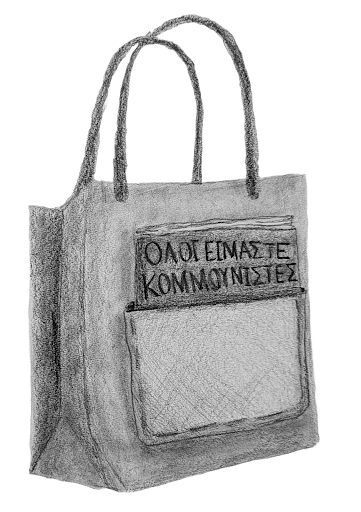
Because I was new, they gave me a bag. It was one of those paper bags with the handles that you get from the fancy stores. The bag was full of their pamphlets for me to give out, along with a translation of The Communist Manifesto for me to read. But it also had a pocket they’d stuck on the front (I could tell it wasn’t like that from the factory) that they slid one of the pamphlets into. It read “WE ARE ALL COMMUNISTS” in big, red letters. I took the pamphlet out of the pocket and stuck it in the bag as soon as I was out of sight. I didn’t want anyone to see me.
“Just what is their problem?” I asked my brother afterwards.
“Don’t you see? They want to change the world! They want to tear down the old, exploitative system!”
“So what’s gonna happen to it?” I asked. “Once they tear it down?”
“Hmm?” he said. He didn’t understand the question.
I never went back.
There was one time, while I was conscripted in the army, that I saw a friend make this incredible shot. We’d been walking through the field with our rifles, just drudgery (we weren’t at war) and then someone spotted ducks flying overhead. They were migrating. My friend asked our CO if he could try shooting one of them out the sky, and he said that he could, but if he missed, he’d have to do twenty days prison for every missed shot. “Prison” was what we called extra days added to your service. I understand Americans don’t do it in this way, but in our country, this was the discipline. Anyway, I’m looking at my friend, and expecting him to back down. They clearly didn’t want him wasting the ammo. But he just took a deep breath, took aim, and right when it looked like the birds were clear out of range, he fired one shot and brought the leader down. I knew then we needed to stick together.
While we were serving, this friend told me he had an idea for a business.
“Have you noticed the taxi service here?” he’d asked.
We were both from the same small island, and so going on leave we were exposed to all sorts of wonders that you only saw on the mainland.
“The taxicabs?” I asked. They had not made as clear an impression on me as they had on my friend.
“Yeah, the taxis. You ever taken one?”
“Me? No, too expensive. I walk.”
“Exactly! Because the price of the ride isn’t just the gas it takes to go from place to place, you also have to factor in the cost of the car, maintenance, tax, and, plus, y’know, whatever little extra the driver wants to keep for himself.”
“I mean, I guess,” I said. “It’s still only worth it for rich people and tourists.”
“My friend,” he said, “can you imagine any business more profitable than one whose customers are only rich people and tourists?”
“You know what?” I said. “I don’t think I can.”
“Exactly! My friend, when we go home, I want us to bring this to our own island. I’ve already spoken to some of the drivers here and I think I understand how it works. We’ll need some money to start. And a lawyer to write paperwork so we can sell medallions. I have a cousin who has a friend who knows one. And the car! It needs to be a nice one, to draw in the rich people. And the tourists! And it needs to be painted blue.”
“Blue?” I asked. “Not yellow?”
“No, none of this ugly yellow they have here. They know, but they don’t know everything. Yellow is cheap. We need something more, uhh, dignified.”
“Royal,” I said. I wasn’t as much a fan of the connotation. He saw this.
“Look,” he said, “for riders, we need the bourgeoisie, as your brother calls them in those letters of his. Let them think the blue is royal. We’ll know it’s different.”
“What then?” I asked.
“What would you pick? As the blue?”
“The ocean,” I said, after some thought. I was always a bit sentimental.
“Alright then. They’ll be blue like the ocean.”
As soon as we got out, we started working to raise money. Besides the car, we needed our own telephone, had to make arrangements with the local businesses and hotels, rent for the space we’d be picking up customers from, and so on… It took some time doing crappy work, but eventually we’d made enough money to get started. Because my friend wanted to have this be a classy car, we’d only been able to afford one. We worked it in shifts. Soon enough, the car needed repairs. No one had bought a medallion yet, but we thought business was doing well enough that we should seek a loan. We wanted to focus on the taxicab business full-time.
My uncle was able to get us a meeting with a local banker, and lent me a suit for it. We had no credit scores back in those days, so the suit was all they had to judge you by. I found mine itchy. The man I was to meet with was a Mr. Alexander. When I walked into Mr. Alexander’s office, I saw that his suit, too, seemed to itch him. I wondered how he bore it.
“Mr. Alexander!”
“Yes, yes, come in kid. Are you here for the taxis?” he asked.
“Yes sir. Though it’s only one taxicab at the moment.”
“One taxi? And what about your—” he riffled through some papers at his desk, “—your business partner? Will he be joining us?”
“Unfortunately not, sir. His other job called him in, and he wasn’t able to take it off.”
“Hmm,” Mr. Alexander said.
The call-in from my friends’ work had struck as terrible disaster. His boss was immovable on the subject, and we couldn’t afford to lose the money the job offered. Yet, we knew that it would look bad to Mr. Alexander to not have both of us present. Unfortunately, it was too late to reschedule, and so we decided that I would head to the meeting alone.
Eventually, Mr. Alexander spoke again.
“It does not inspire terrible confidence in your business venture if both you and your business partner cannot arrange to be present for such an important meeting. Are you authorized to make decisions about this venture without your partner’s consent? Have you even collected all the required paperwork? I informed your uncle that I would need a look at your books, and yet this—” he scoffed, indicating the papers at his desk, “—this is spotty and amateur at best. I have half a mind to throw you out of this office right now. Tell me, kid, why shouldn’t I?”
“Umm,” I said.
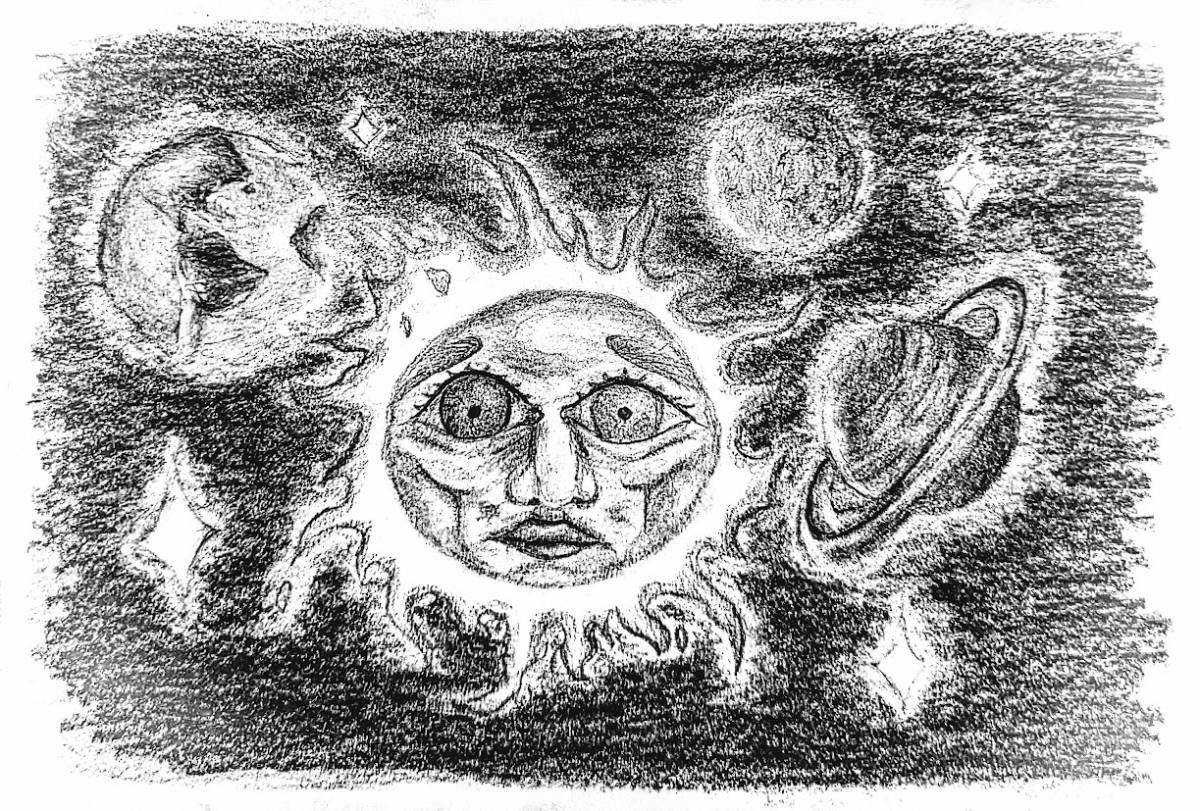
When I was a child, and my grandmother was still alive, I told her I was often scared. I felt paralyzed, and didn’t know what to do.
“Before bed, you should pray, and ask God for guidance. Then, without expecting a reply, you should go to bed. Dream. In the morning, your heart will give you the answer.”
“My heart?” I asked.
“Your heart,” she answered.
I decided to try it here. I didn’t have time to dream, so I would have to pray for an answer and stall, hoping it would arrive in time. Mr. Alexander continued to tear into my friend and I’s lack of professionalism and experience, and I continued to fail to respond in anything other than umms and ahhs. Then, I tried protesting, insisting that we were “commensurate” professionals and other such nonsense, and did my best to deliver the pitch my friend had told me to. I bungled it, badly. I thought that I’d failed. But then, the message from the heart arrived.
He’s not mad because your friend isn’t here, it said. There’s something else.
I don’t know why, maybe it was just desperation, but I decided to trust it. I put complete faith in this notion, and forged full steam ahead.
“Mr. Alexander,” I asked, “can I take a seat?”
“You may, sir.”
Remember, the heart added, the only thing that works is following the sway.
“Thank you.” I said, “Sir, I’m very sorry that my friend isn’t here today. Believe me, he has the better business sense. I’m just a driver. If one of us had to come here alone, I would’ve rathered it be him. But unfortunately, I’m here alone, and so I will not be able to lie as well as business has taught me is required. Yes, sir, you are correct. Our books are a mess. We have had no sales on our medallions so far, our one taxicab needs expensive repairs, and our enterprise is managed by two army buddies with no business education working side jobs to stay afloat. We are not the picture of professionalism.”
“So we are in agreement, then. You are not fit to receive this loan.”
“I think we are.” I replied. “Sir, I do not believe that you would have called us in here if you didn’t think that we had potential. The taxicab services on the mainland have already seen huge success. With more tourism here, we could be a part of that. I can’t tell you the exact numbers, but I think that you suspect this too. I think, too, that all our issues are ones you’re willing to overlook. But there’s something you aren’t. Can I ask what it is, sir?”
“What what is?” Mr. Alexander asked.
“Your objection to us, sir. Your objection to me.”
At this, he sighed. It seemed the message had been correct.
“Son, have you—no, of course you haven’t. Youth is like that. Kid, consider how your business, if it succeeds, will impact this island. You get what you want, a fleet of taxicabs zipping up and down the island, and what does that leave? You and your friend are ignorant of the fact that you will have an impact on the world. Your actions are not yours alone, son. Yes, you’ve hit on quite a thing here. And I see it succeeding. But I have also seen ‘progress’ sweep through towns and leave them shells. Do you want to be a part of that?”
Of course, at this time, I was too young to understand just what this old man was saying to me. But I figured that I was too poor a liar to fake solemnity, and so I decided on honesty.
“I’m not sure I understand, sir.”
He thought for a moment. It seemed to me that his mind was running through a lifetime of experiences, trying to find a story someone like me might understand. Finally, he asked a question.
“You ever heard of the Electrical Experimenter? It’s a magazine.”
“No sir.”
“I figured. They’ve been defunct for who knows how long now. But I remember them, because of their Tesla articles.”
“Nikola Tesla? The inventor?”
“Yes, yes. Well, back in 1919, he wrote a series of articles for them all about his life. And he had this story about trying to get people to use one of his inventions, a motor. And no one would invest in it, because doing so would mean having to convert all their old systems to it. It couldn’t be retrofit in, see? And Tesla was frustrated. And anyway, he had a friend visit him, and Tesla told him all about this, and the friend was not being too sympathetic, and finally Tesla spit out something like ‘My motor will make scrap of all the old!’ ”
After that, he just stared at me, but he seemed warmer somehow. I saw that he wanted me to ask more.
“And? What’d the man say?”
“He did some mental calculations—you know these science kids—and then went: ‘Well… that’ll be an awful lot of scrap.’ And walked out.”
“Huh.”
“Yeah, kid. Huh.”
He was looking at me expectantly again. My guess was that he wanted me to prove that I was responsible, that I wasn’t like all the other young kids that ran through his office looking for easy money, that, like Tesla, I wouldn’t give up in the face of adversity. I was really quite an idiot.
“I’m going to make this business work, sir, no matter what. My partner and I have worked harder on this than anything else in our lives. We’ll make it work somehow. And I understand—we understand—that there will be sacrifice involved.”
“No son, I don’t think you do. You can’t. But I suspect one day you will,” Mr. Alexander said. He gave me another lookover, trying to size me up. I figure he must’ve been satisfied, because then he added:
“Okay son, congratulations. I’ll be granting your loan. I just hope we can handle it.”
“Handle what, sir?”
“Oh,” he said, “well, the scrap.”

The loan meant that both my friend and I could quit our day jobs to focus on the taxicab business. We bought a second car, sold medallions, and our taxicabs began to get numbered. My friend kept the № 1, as he’d spent more on the first car, and I started driving the № 2. He drove it for years and years, even when replacing the car made more sense, until he was forced to scrap it. The damn thing ended up costing us more in repairs than it did to buy. Meantime, business kept expanding. Medallions sales got to 50, then 100, then 200, and so on, until the number stopped mattering. When my friend passed, God rest his soul, I didn’t sell his medallion to anyone else. I didn’t feel it was right.
I don’t remember exactly when it started, but the island slowly got quieter every winter, as more and more of what we did became a service directed at the tourists, rather than ourselves. Walking through the Old Town in the winter, nearly every storefront is closed. It feels colder. I no longer go.
There’s a little beach next to the docks that I used to swim in after work. Hardly has any fish now. I didn’t believe it when my grandchildren told me, but I went with them and, sure enough, it was all gone. They didn’t even know the “pointy rocks” they warned me not to step on used to be coral. I started frantically searching for something, any life, and kept coming up dry. Then I saw a stray little shorefish, no bigger than my thumb, and felt more reassured. I sat the kids down and told them what the beach used to be like.
Y’know, it’s funny how the world changes. The taxi business is the scrap now. The digital whatsits and whosits everyone carries around these days mean that anyone and everyone can be a cabbie. But it’s not the same. The drivers don’t know each other anymore. The fares have gone down. The customers are still tourists, but no longer bourgeois. And the cabs are no longer blue.
Author and Illustrator: Nikos Alexakos is a student at the University of Toronto, where he studies English, creative writing, and studio art. Born to a Greek father and Canadian mother, he has lived in Canada since he was 14 years old. He writes both fiction and nonfiction, and sometimes illustrates his stories.