
Winner of The Letter Review Prize for Poetry
His and her story, with dates
An ordinary story, one of many
My great grandparents, seen dimly.
The record slight, and all memory faded.
I trace their outlines, learning to love them,
though I know that I can never know them.

Let me start with you, William, born in Monaghan,
in 1847, during the great hunger.
Did your parents’ potatoes rot in the fields?
Did they lose their home in the evictions?
Is that what led them to trudge the road
to the port town of Drogheda when you were a child?

And did they see Turkish ships docked by the quay?
Did they eye with envy the Liverpool ferry?

But they travelled no further and Drogheda became home,
and so I find you in St Peter’s in 1871
pledging to hold your sweetheart Kate
for richer and poorer, in sickness and health.

Catherine, Kate, Katie, this is where I first meet you,
beaming gaily as your father walks you to the head of the church.
Altar bells sound and incense burns in the early morning ceremony.
Your bridesmaid is Elizabeth, William’s sister.
Were you two best friends? Did you spend your free days together?
Is this how you met William, dark and reserved, two years your junior?

After the wedding a new start in Dublin,
moving tenement to tenement as your family grows:
three boys born at three different addresses.
You are now a coachman, William, driving an undertaker’s hearse.
You are good at this:
tall, sombre, dressed in black, quiet,
but you can sense when to whisper a few words of compassion
to soothe the bereaved.

Katie, you were proud of the modest success of your family,
three growing boys, sheltered, fed, and happy.
I see them walking to school, or helping their father
to stable the horses and polish the hearse.
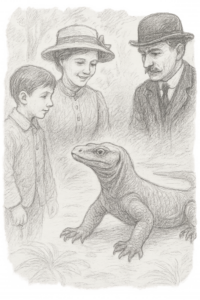
Perhaps you all go on a Sunday outing to the zoo
to laugh at the monkeys and marvel at the newly opened reptile house.

This picture crumbles in 1885
Katie sickens, and William watches over her by night
Perhaps a neighbour cares for her during the day.
Four months later, she dies.
“Uncertified.”

And what can you do now, William?
Your heart’s broken but your boys need minding.
An exchange of letters and an arrangement is made.
You all board the train in Amiens Street for Drogheda,
the boys crammed at the windows, watching steam fill the platforms
of stations along the way.

Though the town is familiar, you are not part of it.
The bustle seems distant as you cross the bridge.
You manage a smile when the boys point excitedly
at sailing ships and steamers, and a constant stream of carts
going to and fro.
You stay one night, urge them to be good,
kiss them goodbye in the morning.

You visit occasionally, noting how they grow so much between visits.
And I find you visiting Drogheda in 1901. Coachman and widower.
But your boys are now away in Africa fighting the Boer.
So we jump to a final date, 1917,
when you die of throat cancer in Drogheda workhouse.

And this is all I have, a few dates around which
to weave my love and tell your story.
Liam Boyle lives in Galway, Ireland. He was a featured poet in the New Writing Showcase at the Cúirt International Festival of Literature. He has been published in various outlets, including Skylight 47, Vox Galvia, Drawn to the Light, Confluence magazine, Causeway magazine, and the Mórbhileog broadsheet. Many of his poems deal with memory, family and heritage. He enjoys spending time with his grandchildren.